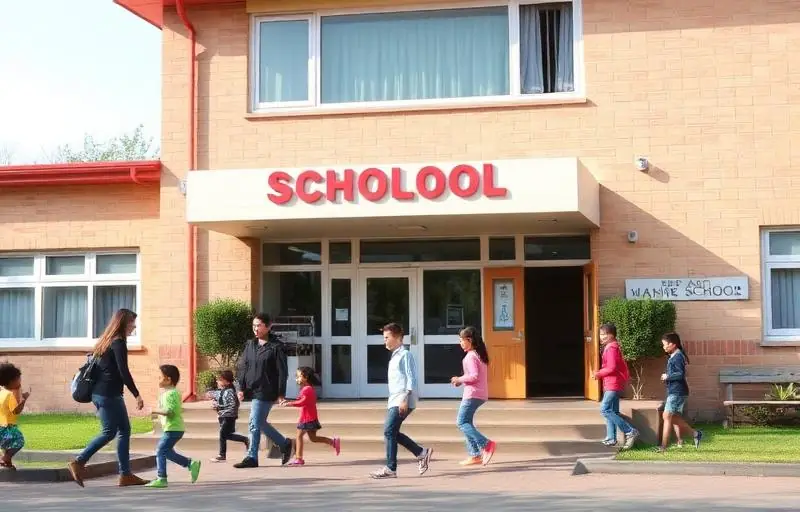
Escola Futuro is an elementary and high school located in Campinas, in the interior of São Paulo. With 2,000 enrolled students and, consequently, 2,000 families to communicate with, the school faced a constant challenge: how to ensure that important information reached parents quickly and reliably.
This case study shows how replacing traditional paper circulars with SMS transformed the school's communication with families.
The Problem: Circulars That Never Arrived
For years, Escola Futuro relied on the traditional method of communication: printed circulars sent home in students' backpacks. The process worked like this:
1. The front office drafted the announcement
2. Sent it to print 2,000 copies
3. Distributed them to classrooms
4. Teachers handed them out to students
5. Students (theoretically) handed them over to parents
The problem? In practice, this process failed at almost every stage:
Principal Fernanda Oliveira estimates that only 30–40% of parents actually received and read the circulars. For parent-teacher conferences, attendance was merely 25%—many simply didn't know the date.
"It was frustrating. The school spent time and money printing circulars that half the students lost. And when we needed to communicate something urgent—like a closure due to heavy rain—we had no way of reaching families quickly," says Fernanda.
The Cost of Inefficient Communication
The Transition to SMS
The school decided to adopt SMS as its primary communication channel with families after evaluating alternatives:
Email: Ruled out because many parents didn't have an email address or didn't check it regularly.
School App: Ruled out due to high costs (R$ 3.000/mês) and the requirement for downloads and an updated smartphone.
WhatsApp: Ruled out due to a lack of scalability and the chaos generated by parent groups.
SMS: Chosen for its universality (100% of parents have a mobile phone), affordable cost, and guaranteed delivery.

Implementation
Implementation was simple and fast:
Week 1 — Collecting Numbers: The administrative office updated records with the mobile numbers of all legal guardians. 98% of the data was already in the system.
Week 2 — Account and Setup: Account creation on SMS Grátis Online and training for the administrative staff.
Week 3 — First Broadcast: An official announcement informing parents that the school would start using SMS as its primary channel.
Week 4 — Full Operation: All school announcements began being sent via SMS.
Types of Messages Sent
Meeting and Event Notices
"Escola Futuro: Parent-teacher meeting on 03/15 at 7 PM. Agenda: 2nd semester calendar. Please confirm: YES or NO"
Emergency Alerts
"URGENT Escola Futuro: Due to heavy rain, the school will close at 2 PM today. Please pick up your child as soon as possible."
Report Cards and Grades
"Escola Futuro: The 1st term report card for {student_name} is now available. Access: {link} or pick it up at the office."
Invoices and Payments
"Escola Futuro: March tuition is due on the 10th. Amount: R$ {amount}. PIX: escola@futuro.com.br. Avoid late fees!"
Holidays and Reminders
"Escola Futuro: Tomorrow is our Festa Junina! Your child can come in costume. Event from 2 PM to 5 PM in the courtyard."
School Calendar
"Escola Futuro: School break from 07/01 to 07/15. Classes resume on 07/16 at regular hours."
Impressive Results
After 6 months of exclusively using SMS:
Open Rate: 98% (vs. 30–40% for paper circulars)
Communication Speed: From days to seconds. In an emergency, the school reaches all 2,000 families in under 1 minute.
Monthly Cost: R$ 360 (6,000 SMS/month)—a savings of over 50% compared to printing costs + staff time
Parent-Teacher Conference Attendance: Jumped from 25% to 72%—nearly tripling
Parent Satisfaction: 9.2/10 rating in satisfaction surveys
Delinquency Reduction: Overdue tuition payments dropped 35% with SMS reminders
Paper Savings: Zero printed circulars—a positive environmental impact

Special Cases Highlighting the Power of SMS
The March Storm
In March 2026, a severe thunderstorm hit Campinas at 1 PM. The school decided to dismiss students early. Within 45 seconds, 2,000 SMS messages were sent: "URGENT: School will close at 2 PM due to the storm. Please pick up your child." Within 40 minutes, 95% of students had already been picked up. "Before SMS, it would have taken us hours making phone calls, and many parents would only have found out when arriving for regular pickup," says Fernanda.
Record-Breaking Meeting Attendance
The first parent-teacher conference announced exclusively via SMS achieved 72% attendance—an all-time record in the school's history. A reminder SMS sent 2 hours beforehand proved decisive.
On-Time Payments
With due-date reminders sent 3 days in advance and on the due date itself, delinquency dropped from 18% to 12%. The school recovers R$ 15.000/mês that previously went unpaid.
What Parents Are Saying
The school conducted an anonymous survey among parents regarding the new communication system:
"Parents love receiving SMS. It's fast, direct, and doesn't rely on an internet connection. In an emergency, we can alert all 2,000 families in less than 1 minute. We wouldn't go back to paper for anything in the world." — Fernanda Oliveira, Principal of Escola Futuro
Step-by-step guide to structuring a school SMS communication workflow
For the transition from paper to the digital channel to bring consistent benefits to daily pedagogical and administrative routines, the institution must establish clear processes before starting mass messaging.
Mapping contact touchpoints: Identify all situations where the school needs to reach out to guardians throughout the school year. This includes pedagogical meetings, tardiness alerts, report card distributions, financial notices, and emergency notifications.
Segmentation by educational stages: Not all information interests all guardians simultaneously. Dividing the database into groups such as Early Childhood Education, Elementary School, Middle School, and High School prevents sending irrelevant messages to families not involved in a particular activity.
Standardization of institutional signature: Always start the text with the school's official name. Since short messages are usually received via shared short codes, an immediate signature conveys credibility and prevents the message from being mistaken for spam.
Definition of sending workflow and responsible staff: Determine who in the front office or academic coordination will have authorization to draft and send announcements, establishing a simple prior review to check dates, times, and spelling before final dispatch.
Contact list hygiene routine: Establish a semiannual routine to validate phone numbers with guardians, taking advantage of re-enrollment periods or in-person meetings to update outdated records.
Ready-to-use SMS templates for daily school life
Having pre-formatted texts speeds up the administrative office's routine and ensures that no essential information is left out when messaging parents.
Student absence notice: "Escola Futuro: Student {nome_aluno} did not attend class today, {data}. If you need to justify the absence, please contact coordination via the school office phone."
Parent-teacher conference call: "Escola Futuro: Our individual parent-teacher conference will take place on Saturday, {data}. Schedule your appointment with the teachers directly at the front office."
Bimonthly exam reminder: "Escola Futuro: The exam period for {bimestre} starts next Monday. Encourage your child to keep up with their study routine. Have a great weekend!"
Notification of activities and field trips: "Escola Futuro: The deadline to submit the field trip authorization form ends on {data}. The signed document must be delivered to the front office."
Re-enrollment campaign: "Escola Futuro: The official re-enrollment period for the next school year is open. Secure your child's spot at the school office until {data}."
Notice of specific class cancellation: "Escola Futuro: Reminder that this Friday, {data}, there will be no classes due to teachers' professional development day. Normal return on Monday."
Common mistakes in SMS communication with families
Although the channel offers great agility, some operational missteps can harm the school community's engagement.
Sending messages outside appropriate hours: Sending pedagogical announcements late at night or on Sundays causes unnecessary annoyance. Always keep routine dispatches within business hours, reserving weekends exclusively for urgent, unforeseen situations.
Omission of essential practical details: Merely announcing a meeting without including the full date, start time, and exact location forces parents to call the school office, overloading the institution's phone lines.
Excessive use of abbreviations: Although character limits require conciseness, informal abbreviations can make reading difficult for guardians less familiar with digital language. Prioritize complete words and straightforward sentences.
Excessive sending frequency: Sending multiple alerts on the same day for routine matters reduces the attention guardians pay to important messages. Group weekly announcements into a single planned dispatch whenever feasible.
Frequently asked questions about SMS usage in educational institutions
Is prior authorization from parents required to send SMS?
The contractual relationship for educational service provision already provides for the necessity of communication regarding academic routines and student safety. Even so, it is advisable to include a clear clause in the enrollment contract stating that the registered cell phone will receive institutional notices from the school.
What to do when guardians change their phone numbers?
The most efficient approach is to create periodic reminders on the school's physical channels and request phone number verification during report card handovers or in-person form signings. Additionally, delivery reports highlighting invalid numbers help the office identify who needs to update their information.
Is SMS affordable for small and medium-sized institutions?
Yes. Professional platforms operate on a pay-per-message model, with costs starting at a few cents per dispatch, without requiring support subscription fees or fixed maintenance charges typical of dedicated school apps. This makes it feasible for schools with hundreds of students as well as for larger networks.
Recommendations for Other Schools
1. Collect every phone number: Ensure 100% of guardians have their mobile phone registered
2. Set an appropriate frequency: 2–4 SMS messages per week is ideal. Don't bombard parents
3. Be clear and concise: School messages should be direct—date, time, required action
4. Use it for emergencies: The true value of SMS shines in urgent situations
5. Monitor satisfaction: Run regular surveys to make sure parents remain satisfied