The Brazilian healthcare sector faces a multi-billion-dollar problem: no-shows. Patients who book appointments and fail to show up account for 20-30% of all bookings in clinics and hospitals. Each missed appointment costs between R$ 150 and R$ 500, depending on the specialty. In a medical practice with 20 patients/day, this represents a loss of R$ 600-1,500/day.
SMS is the most effective and proven solution to reduce no-shows in healthcare. International studies show that SMS reminders reduce absences by 30-50%, and Brazilian data confirm even better results: clinics that implement SMS report reductions of up to 70% in no-shows.
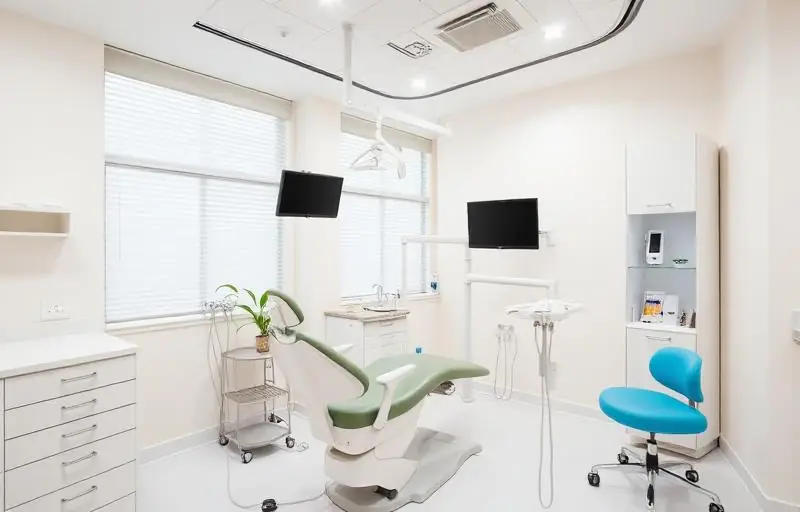
The impact of no-shows on healthcare
Direct costs
Indirect costs
Why do patients miss appointments?
1. Forgetfulness (60%): They simply forgot
2. Schedule conflicts (20%): A commitment came up later
3. Fear/anxiety (10%): Mainly regarding procedures
4. Access difficulties (5%): Transportation, distance
5. No longer needed (5%): Symptoms resolved
SMS directly resolves reason #1 (forgetfulness) and #2 (conflict — enables rescheduling).
SMS workflow for healthcare
Appointment confirmation
Immediately after booking:
"Appointment booked! ✅ Dr. {name} — {specialty}. Date: {date} at {time}. {Clinic}, {address}. Questions: {phone}"
Reminder 48 hours prior
"Hi {name}! Reminder: Your appointment with Dr. {name} is in 2 days ({date}) at {time}. Confirm: Reply YES. To reschedule: {phone}. {Clinic}"
Reminder 24 hours prior
"Tomorrow! Appointment with Dr. {name} at {time}. {Clinic}, {address}. Please bring: photo ID and insurance card. See you there!"
Reminder 2 hours prior
"See you soon, {name}! Your appointment is in 2h ({time}) with Dr. {name}. Address: {address}. {Clinic}"
Post-appointment
"Thank you for your visit, {name}! 😊 How was your care? Leave a review: {link}. {Clinic}"

SMS by type of establishment
Medical practices
"📋 Hi {name}! Your test results are ready. Schedule a follow-up with Dr. {name} to review the results: {phone}. {Clinic}"
Dental clinics
"🦷 {Name}, your six-month dental check-up is due! Book now: {phone}. Prevention is the best treatment! {Clinic}"
Laboratories
"🔬 Reminder: Your {type} test is tomorrow. A 12h FAST is mandatory. Last meal: by {time} today. {Laboratory}"
Hospitals
"Hi {name}! Pre-op instructions ({date}): 8h fast, no makeup/nail polish, adult companion required. Details: {link}. {Hospital}"
Physical therapy clinics
"💪 Reminder: Physical therapy session tomorrow at {time}. Session {X} of {total}. Wear comfortable clothes! {Clinic}"
Metrics and results
Data from clinics using SMS
|---------|---------|---------|----------|
Case study: MedVida Clinic (4 physicians, 8 specialties)
Before SMS:
After SMS (1 year):
Monthly investment: R$ 288 (4,800 SMS)
Monthly recovered revenue: R$ 36.000
ROI: 12,400%
"SMS pays for itself in less than 1 hour in the clinic. It is the highest-return investment we have ever made." — MedVida Administrator
LGPD in healthcare
Health data is classified as sensitive data under the LGPD (Brazilian General Data Protection Law). Key precautions:
1. Never mention diagnoses: "Your cardiology appointment" may disclose a health condition
2. Specific consent: Collect explicit authorization to send SMS
3. Data security: Protect patient phone numbers and personal information
4. Safe template: "Your appointment with Dr. {name} on {date} at {time}"
Best practices for healthcare
1. Confirm, do not just remind: Ask for a YES/NO reply to spot cancellations early
2. Offer easy rescheduling: If a patient cannot attend, make it simple to reschedule
3. Precise timing: 48h + 24h prior is the ideal combination
4. Preparation instructions: Fasting, required documents, accompanying companion
5. Post-appointment: Request feedback and book follow-ups
6. Respect business hours: Send between 8:00 AM and 7:00 PM
Step-by-step guide to structuring an SMS workflow in your clinic
To transform one-off message sending into a continuous system that reduces no-shows, it is worth following a simple internal organization method:
Common mistakes in healthcare SMS communication
Small oversights in drafting and managing messages can compromise the patient experience and the clinic's workflow:
Ready-to-use message templates for specific situations
In addition to standard appointment reminders, SMS can be used to manage unforeseen events and speed up operational processes:
Frequently asked questions about SMS for clinics and medical offices
Can elderly patients use this channel without difficulty?
SMS is generally one of the most accessible formats for seniors. It does not require an active mobile data connection or downloading heavy apps. The message appears directly in the device's inbox, making reading and replying simple on any type of mobile phone.
What should be done if a patient confirms their attendance and still misses the appointment?
In these situations, log the absence in the medical record and send a friendly message the following day. The text can express regret over their absence and offer an easy way to reschedule. This approach maintains the connection with the patient and allows you to recover an appointment that would otherwise be lost.
Is it viable to use this channel for preventive healthcare messages?
Sending reminders about routine checkups and seasonal screenings is generally well-received, provided it focuses on promoting continuous care. It is essential, however, to avoid purely commercial pitches and to comply with the ethical guidelines of healthcare professional boards regarding medical advertising.
Conclusion
SMS is the most effective and cost-efficient tool to curb no-shows in healthcare. With an investment of pennies per message, clinics recover thousands of reais in appointments that would otherwise be lost. In addition, they improve patient satisfaction, drive positive reviews, and optimize the administrative team's valuable time.