Music, language, dance, and extracurricular schools share a common challenge: student dropouts. Unlike formal education, extracurricular courses depend 100% on student motivation—and that motivation fluctuates. A student who misses 2 classes in a row has a 70% chance of quitting the course. A student who receives a thoughtful reminder has an 85% chance of returning.
SMS is the perfect tool for keeping students engaged, confirming classes, announcing events, and filling open spots. With a 98% open rate, it ensures that the student (or their parents) receives the information at the right time.
Why SMS works for extracurricular courses
1. Classes get forgotten
With busy routines, students forget class times. A reminder solves that.
2. Parents need to stay informed
For younger students, communication happens with parents—and parents read SMS.
3. Motivation needs reinforcement
An encouraging SMS at the right time keeps the student motivated.
4. Spots need to be filled
New cohorts, workshops, and masterclasses need fast, effective promotion.
Types of SMS for music schools
Class reminder
"🎵 Hi {name}! Reminder: Your {instrument} class is tomorrow ({day}) at {time} with teacher {name}. We look forward to seeing you! {School}"
Student absence
"Hi {name}! We missed you in today's {instrument} class. 😊 Is everything okay? Would you like to reschedule? {phone}. {School}"
Makeup class
"📅 Your {instrument} makeup class has been scheduled for {date} at {time}. Confirm: Reply YES. {School}"
Enrollment and re-enrollment
"🎶 Enrollments are open at {School}! Guitar, piano, drums, and vocal lessons. 1st trial lesson is FREE! Book now: {phone}"
Recital and performances
"🎤 YEAR-END RECITAL! {School} invites you: {date} at {time} at {location}. Free admission! Bring family and friends. 🎵"
Payment
"💳 Reminder: {month} tuition for {School}: R$ {value}. Due date: {date}. Pay via: {link}. Questions: {phone}"
Workshop and masterclass
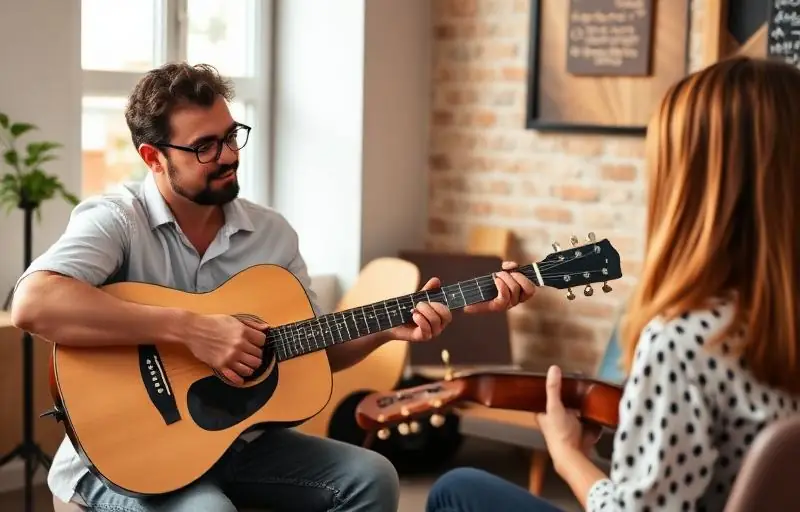
"🎸 SPECIAL WORKSHOP: Blues Improvisation with {teacher}! {date}, {time}. Limited spots: R$ {value}. Sign up: {phone}. {School}"
Student progress
"🌟 Congratulations, {name}! You have completed {X} months of {instrument}! Your progress is amazing. Keep it up! 🎵 {School}"
Breaks and return to classes
"🎵 Classes at {School} resume on {date}! Same schedules. Excited to get started again! Questions: {phone}. Happy holidays! 😊"
Referrals
"Bring a friend to {School} and get 1 month at 50% OFF! Your code: {code}. Share: {link}"
Retention strategies
Anti-dropout sequence
When a student misses a class:
Progress milestones
Celebrate achievements via SMS:
New cohorts
"🆕 New {instrument} cohort starting on {date}! {day}s at {time}. Limited spots ({X} remaining). Enroll now: {phone}. {School}"
Real results
Case Study: Harmonia Music School
A school with 8 teachers and 200 active students:
Before SMS:
After SMS (6 months):
Monthly investment: R$ 120 (2,000 SMS)
Retained revenue (students who would have dropped out): R$ 4.800/mês
ROI: 3,900%
"The anti-dropout SMS saved dozens of students. Many responded saying they were feeling demotivated, and we were able to talk and bring them back. Without SMS, they would have simply disappeared." — Director, Harmonia Music School
Recommended automations
1. Class reminder: 24h before each class
2. Absence alert: Same day, 2h after the scheduled time
3. Monthly tuition: 5 days before the due date
4. Student's birthday: Automated SMS
5. Progress milestone: At 1, 3, 6, and 12 months
6. Return from break: 1 week before classes resume
Best practices
1. Motivational tone: Music and art require constant encouragement
2. For minors, SMS to parents: Include the student's name to personalize
3. Celebrate milestones: Recitals, grade/level exams, progress
4. Frequency: 2-3 SMS/month (class reminders are separate)
5. Events as a hook: Recitals, workshops, and masterclasses renew motivation
6. Community: SMS about school events builds a sense of belonging
Step-by-step guide to structuring your school's communication workflow
Integrating message broadcasts into the front office's daily routine needs to be practical and predictable to avoid overloading the team. To implement this routine efficiently:
Common mistakes when sending SMS to extracurricular course students
Even with the low cost provided by the platform, with messages starting at R$ 0,06 on SMS Grátis Online, some operational oversights can harm campaign results:
Key indicators to track the impact of SMS
To verify the channel's efficiency in the routine of the music school or extracurricular course, track simple metrics over the months:
Frequently asked questions about SMS for extracurricular courses
Is it better to send the SMS to the student or to their guardians?
For children or teenagers up to 14 years old, all communication regarding schedules, pedagogical notices, and billing should be directed to the parents. For teenagers 15 and older who have their own phone, class reminders and encouragement can be sent directly to them, while keeping financial notices exclusive to the guardian.
How should we handle it when a student replies to a text message?
The sending platform receives replies in a unified dashboard. The front desk team can respond directly through the system or forward the case to phone support or a messaging app, ensuring that no question goes unanswered.
How far in advance should recitals and performances be announced?
The first notice should be sent between 15 and 20 days before the event date, allowing families to plan ahead. One week prior, send location and ticket details, concluding with a final reminder the day before the show.
Is it worth using SMS to sell materials and accessories?
Yes. Music courses often require method books, drumsticks, strings, reeds, and tunings. Announcing the arrival of new items or study kits via SMS is an effective way to generate additional revenue for the administrative office.
Conclusion
For music schools and extracurricular courses, SMS is the bridge between motivation and consistency. It reduces dropouts, fills cohorts, celebrates progress, and keeps students connected to the school. With an investment of just R$ 120/mês, the return on retention and new enrollments is extraordinary.