Logistics is the critical point of any e-commerce or retail operation. Having the best product and the most competitive price means nothing if delivery fails. And the biggest cause of delivery dissatisfaction isn't the delay itself—it's the lack of information. Customers don't know where their order is, don't know when it will arrive, and can't plan ahead.
SMS solves this problem simply and effectively. With a 98% open rate, it's the most reliable channel for keeping customers informed about every stage of delivery—reducing support tickets, failed deliveries due to absence, and negative reviews.
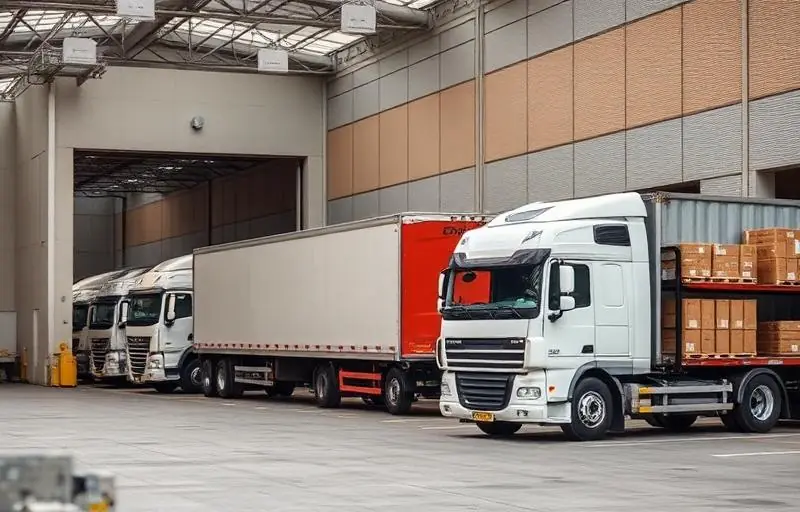
The Complete SMS Flow in Logistics
Step 1: Order confirmation
Immediately after purchase:
"Order #{numero} confirmed! ✅ Estimated delivery: {data}. Track it: {link}. {Loja}"
Step 2: Invoice issued
"Invoice for order #{numero} issued! 📄 Your package will be dispatched within 24h. {Loja}"
Step 3: Order dispatched
"Your order #{numero} has been shipped! 📦 Carrier: {nome}. Tracking: {codigo}. Track it: {link}. {Loja}"
Step 4: In transit
"Your order #{numero} is on its way! 🚚 Updated estimate: {data}. Tracking: {link}. {Loja}"
Step 5: Out for delivery
"Your order #{numero} is out for delivery TODAY! 📦🏠 Estimated time: by {horario}. Someone must be at the address. {Loja}"
Step 6: Delivered
"Order #{numero} DELIVERED! ✅ Received by: {nome}. Everything okay? Rate your experience: {link}. {Loja}"
Step 7: Failed delivery attempt
"We tried to deliver your order #{numero}, but no one was home. 😕 Next attempt: {data}. Reschedule: {link}. {Loja}"
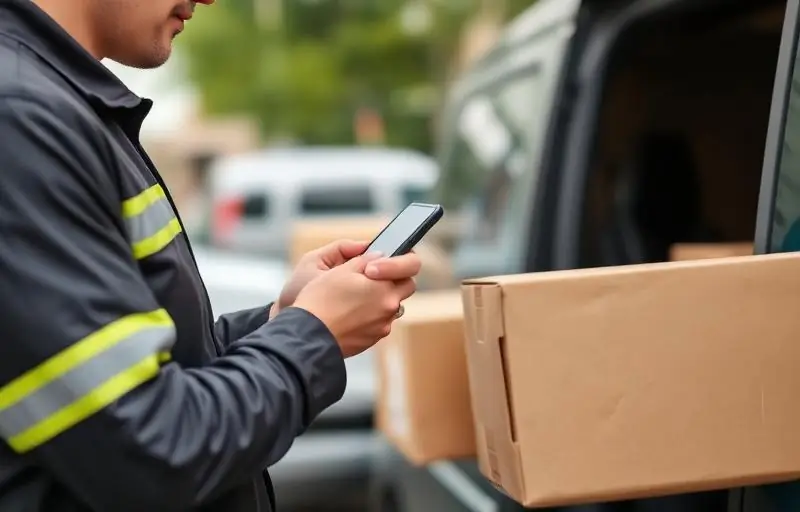
Measurable Benefits of SMS in Logistics
Reduction in customer support calls
"Where is my order?" is the #1 question in any e-commerce customer support department. Proactive SMS messages with status updates reduce these inquiries by up to 70%.
Reduction in failed deliveries
SMS alerts notifying customers that an item is out for delivery allow them to prepare to receive it. Companies report a 40–50% drop in failed attempts.
Increase in positive reviews
Requesting a review via SMS right at delivery (when the customer is happy) generates 5x more reviews than asking via email days later.
Reduction in returns
Clear information about deadlines and tracking reduces the anxiety that leads to premature cancellations.
Advanced Strategies
SMS for reverse logistics
"Your return for order #{numero} has been received. ✅ Refund processed within 5 business days. Track it: {link}. {Loja}"
Rescheduling via SMS
"We couldn't deliver your order #{numero}. Choose a new delivery window: Reply 1 for morning, 2 for afternoon, 3 for evening."
Proactive delay notifications
"Your order #{numero} experienced a delay with the carrier. New estimate: {data}. We apologize for the inconvenience. Track it: {link}. {Loja}"
Informing the customer of a delay BEFORE they ask turns a negative experience into a demonstration of transparency.
SMS for carriers and drivers
Not just for the end customer—SMS for drivers and couriers:
"Updated route: 15 deliveries today. First stop: {endereco} at {hora}. View route: {link}. Have a safe trip!"
System Integrations
WMS (Warehouse Management System)
When the order is picked and packed → Automatic dispatch SMS.
TMS (Transportation Management System)
When status updates with the carrier → Automatic update SMS.
E-commerce (Shopify, WooCommerce, VTEX)
API integration to send SMS messages at every order status change.
Real Results
Case Study: ModaExpress E-Commerce
Online fashion store, 8,000 orders/month:
Before SMS:
After SMS (6 months):
Monthly investment: R$ 2.880 (48,000 SMS — 6 per order)
Support savings: R$ 8.400/month (reduction in support agents)
ROI: 191% from support savings alone, not counting customer retention
"Every tracking SMS is a positive touchpoint with the customer. Before, the only post-purchase contact was a complaint. Now, it's information." — Operations Manager at ModaExpress

Best Practices for Logistics
1. Be proactive: Inform BEFORE the customer asks
2. Include a tracking link: Whenever possible, with a mobile-friendly page
3. Notify about delays: Transparency builds trust, even when issues arise
4. Precise timing: The "out for delivery" SMS should be sent when it has truly gone out
5. Request reviews at the right time: Right when the package arrives
6. Personalize: Use customer name and order number
Step-by-step guide to structuring operational dispatches
Integrating text message notifications into the shipping routine does not require overhauling existing systems. Minor automation configurations swiftly connect the physical movement of goods to the recipient's mobile screen:
Message templates for atypical route situations
Beyond the standard shipping flow, logistics teams deal with unforeseen issues daily. Keeping the customer informed of these contingencies via text message reduces anxiety and prevents premature cancellations:
Common mistakes in freight and transport communication
Despite the channel's practicality, missteps in content structuring or sending timing can damage the delivery experience:
Frequently asked questions about shipping notifications
Does the customer need an active internet connection to receive the delivery notice?
No. Text messages are transmitted over conventional mobile phone networks and reach the device even without a data connection or Wi-Fi. Internet access is only required if the user chooses to open the link to view the map or detailed proof of delivery.
How to stay within the 160-character limit with so much information?
To prevent mobile carriers from splitting the text into multiple dispatches, use reliable link shorteners and eliminate lengthy greetings. Focusing directly on the status and order number keeps the text concise, straightforward, and cost-effective.
Is consent mandatory to send the order status?
Sending messages strictly to inform about the progress of a completed purchase is supported by the fulfillment of the service provision, as it serves the consumer's direct interest in tracking the acquired goods.
Conclusion
In logistics, SMS is more than communication—it's customer experience infrastructure. Every status update reduces anxiety, support tickets, and failed deliveries. The investment is minimal compared to the return in satisfaction, retention, and operational efficiency.