NGOs and third-sector organizations face a paradox: they need to communicate with thousands of supporters, volunteers, and beneficiaries, yet they operate with extremely limited budgets. Email is largely ignored (15-18% open rate in the non-profit sector), social media is held hostage by unpredictable algorithms, and phone calls are expensive and time-consuming.
SMS solves this equation. At R$ 0,06 per message and with a 98% open rate, it is the most efficient and affordable channel for organizations that need to maximize every single cent invested in communication.
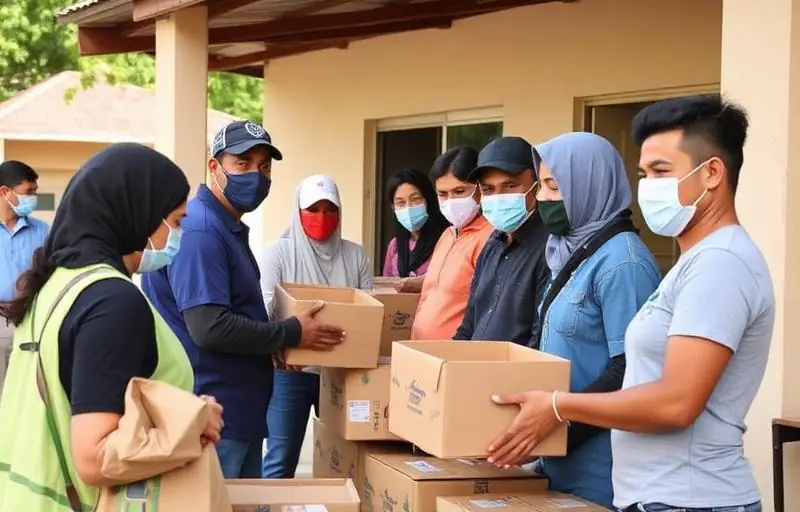
Why SMS Is Ideal for NGOs
1. Minimal cost, maximum reach
Communicating with 5,000 supporters costs just R$ 300 — less than running a Google Ad.
2. Digital inclusion
Many NGO beneficiaries do not own smartphones or have consistent internet access. SMS works on any basic mobile phone.
3. Urgency for time-sensitive campaigns
Natural disasters, relief emergencies, and deadline-driven campaigns require instant communication.
4. Personal connection
A thank-you SMS for a donation delivers far more personal impact than an automated email.
Types of SMS for NGOs
Fundraising and donations
"❤️ Your donation of R$ {valor}/month feeds 3 children for an entire day. Donate now: {link}. {ONG}. Opt-out: STOP"
Donation thank-you messages
"Thank you, {nome}! 🙏 Your donation of R$ {valor} is already making a difference. See the impact: {link}. {ONG}"
Emergency campaigns
"🆘 URGENT: Floods in RS have left 500 families homeless. We urgently need donations: {link}. Every R$ counts! {ONG}"
Volunteer mobilization
"📢 Volunteers needed! Community action day on {data} at {local}. Sign up here: {link}. Bring a friend! {ONG}"
Transparency and accountability
"Transparency {ONG}: In {mês}, we supported {número} families using R$ {valor} raised. Read the full report: {link}. Thank you! 📊"
Events and fundraisers
"🎉 {ONG} Charity Bazaar: {data}, {local}. Clothes, toys, and furniture at symbolic prices. All proceeds go to {causa}!"
Beneficiary communication
"Hi {nome}! Reminder: Essential food basket delivery on {data} from 9am to 3pm at {local}. Please bring a photo ID. {ONG}"
Impact reports
"🌟 2025 in numbers: {ONG} helped {X} people, distributed {Y} food baskets, and trained {Z} young people. All thanks to you! Report: {link}"
SMS Fundraising Strategies
Recurring donations
"Hi {nome}! How about turning your support into ongoing impact? For R$ 30/month, you feed an entire family. Learn more: {link}. {ONG}"
Urgent one-time donations
"⏰ Only R$ {valor} left to hit the goal for the {nome} campaign! Deadline: {data}. Donate any amount: {link}. {ONG}"
Matching gifts (doubled donations)
"📣 TODAY: Every R$ 1 donated becomes R$ 2! Our partner {empresa} is matching all donations until midnight. Donate now: {link}. {ONG}"
Donor birthdays
"Happy birthday, {nome}! 🎂 On this special day, how about giving a gift to someone in need? Donate R$ {valor}: {link}. {ONG} is grateful for you!"
Segmentation for NGOs
By supporter type
By engagement level
Real Results
Case Study: ONG Mãos que Alimentam
An NGO dedicated to fighting hunger, with 8,000 registered supporters:
Before SMS:
After SMS (10 months):
"SMS transformed our fundraising. An emergency SMS blast sent during the floods raised R$ 15.000 in just 48 hours. Doing that via email would have taken us weeks." — Executive Director, Mãos que Alimentam
Best Practices for NGOs
1. Tell stories: Don't just ask for money — tell the story of the person who will be helped
2. Demonstrate impact: "Your donation of R$ 50 = 10 hot meals" is far more powerful than simply saying "Donate R$ 50"
3. Always say thank you: Every single donor deserves an immediate thank-you SMS
4. Be accountable: Transparency builds trust and encourages recurring contributions
5. Keep frequency balanced: 2-3 SMS/month for donors, 1-2 for volunteers
6. Keep urgency genuine: Only use an urgent tone when a situation is truly critical
7. Link directly to a landing page: Remove friction with a clean, mobile-optimized donation page
Step-by-step guide to structuring SMS campaigns in the third sector
Implementing text message broadcasts in a social organization requires prior planning to ensure every cent of the budget is maximized. To achieve the best operational performance with sends starting at R$ 0,06 per message, follow this implementation roadmap:
Common mistakes that hinder fundraising via SMS
Many third-sector organizations make simple mistakes during mobile communication that reduce engagement and alienate potential donors. Recognizing these missteps helps preserve the organization's reputation:
Essential metrics to evaluate the impact of SMS
To understand whether the investment in mobile messaging is delivering an adequate return for social initiatives, the management team should track specific indicators:
Frequently asked questions about SMS in the third sector
How to ensure sends comply with the LGPD?
The organization must collect phone numbers through voluntary consent, using physical registration forms, website forms, or public events. It is essential to inform supporters about the purpose of the contact and provide clear instructions for them to revoke their permission at any time.
Is it viable to send Pix keys directly in the SMS text?
Yes, sending short keys such as email addresses or specific numbers facilitates instant contributions from supporters, who can copy the information directly on their phone: "Support the renovation of our community space! Pix Key for {ONG}: {chave_pix}. Your help makes a difference. Details: {link}".
What is the most recommended time to send social communications?
Business hours on weekdays, especially between midday and early evening, tend to record better reading engagement without intruding on supporters' personal time. Weekend sends should be strictly reserved for emergency appeals or immediate in-person events.
Does SMS help combat defaults on recurring donations?
The channel works quickly to alert about credit card processing failures or upcoming due dates for donation bank slips: "Hi, {nome}. We noticed an issue processing your monthly contribution to {ONG}. Update your payment method here: {link} and keep supporting our project!"
Conclusion
For NGOs, SMS is not a luxury — it is an absolute necessity. It remains the most efficient, cost-effective, and inclusive channel to connect with both supporters and beneficiaries. With the right strategy, SMS can double or triple your fundraising results, multiply volunteer turnout, and build lasting ties across your community.