SMS for Carriers and Fleet Management: Tracking, Alerts, and Operational Efficiency
Discover how freight carriers use SMS to track deliveries, alert drivers, notify customers, and reduce operational costs by up to 40%.
The transportation and logistics sector is the backbone of the Brazilian economy. With over 2 million trucks traveling the country's roads and a market that generates R$ 800 bilhões annually, operational efficiency is the difference between profit and loss. In this scenario, instant and reliable communication is crucial — and SMS is the only tool that works everywhere, including remote highways where the internet is unstable or nonexistent.
In this guide, we will explore how carriers of all sizes use SMS to optimize operations, communicate with drivers in real time, keep customers informed, and significantly reduce operational costs.
SMS for Carriers and Fleet Management: Tracking, Alerts, and Operational Efficiency
Why SMS is essential for carriers
The connectivity problem
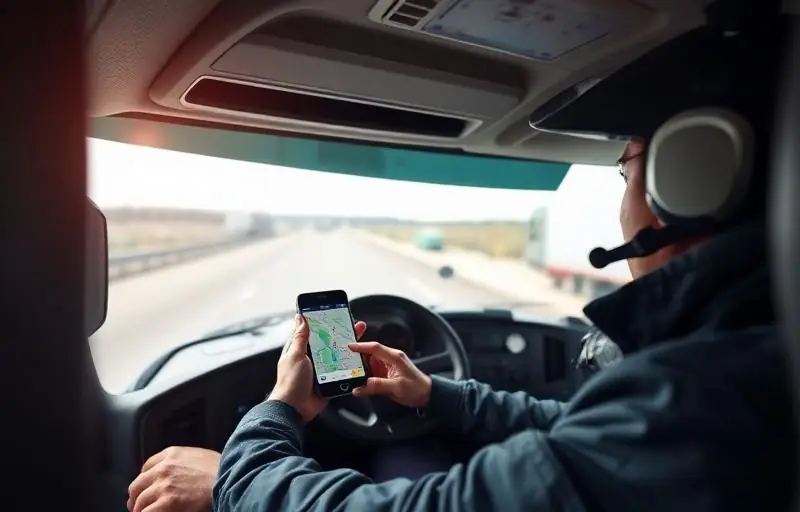
Truck drivers spend a large portion of their time on highways where internet signals are weak or nonexistent. Apps like WhatsApp, Telegram, and online tracking systems depend on a stable 4G/5G connection — something that simply does not exist across much of Brazil's road network.
SMS, on the other hand, operates over 2G signals — available in virtually 100% of the national territory. This means a driver on BR-163, in the middle of Mato Grosso, receives an SMS even when no apps are working.
Reliability comparison:
WhatsApp: works on ~70% of Brazilian highways
Tracking apps: rely on constant internet
SMS: works on ~99% of Brazilian highways
Cost per message: R$ 0,06
Simple two-way communication
SMS allows drivers to respond quickly and simply, without having to open apps or type lengthy messages:
**Dispatch to driver:** "Load #4521 available for pickup in Campinas. Accept? Reply YES or NO."
**Driver replies:** "YES"
**System confirms:** "Load #4521 confirmed. Pickup: Av. Brasil, 1500, Campinas. By 2 PM. Documents sent to email."
Operational use cases
Tracking and delivery status
At each checkpoint, the system sends automated SMS messages:
To the driver:
"Checkpoint: Fiscal Post Registro/SP. Confirm passage by replying OK."
To the customer (cargo recipient):
"Your shipment #4521 passed through Registro/SP at 10:42 AM. Estimated arrival: today at 4 PM. Track: [link]"
Upon delivery:
"Shipment #4521 delivered successfully at 3:38 PM. Received by: João Silva. Receipt: [link]"
Preventive maintenance alerts
The system integrated with fleet management sends automated reminders:
"⚠️ Truck ABC-1234: Oil service scheduled for tomorrow. Current mileage: 48,200 km. Shop: Rede Truck Osasco. Confirm time."
"⚠️ Truck DEF-5678: Tire change required in 2,000 km. Schedule at the next stop. (11) 9xxxx-xxxx"
Safety alerts
"ALERT: Highway BR-101 km 342 — accident with partial lane closure. Detour via SP-055. Update your route."
"Caution: Heavy rain forecast in Serra do Rio do Rastro over the next 3h. Reduce speed and turn on headlights."
SMS for Carriers and Fleet Management: Tracking, Alerts, and Operational Efficiency
SMS for carrier clients
Proactive notification
Customers who receive proactive updates about their freight are significantly more satisfied:
Pickup completed:
"Your shipment was picked up today at 09:15 AM in São Paulo. Estimated delivery: Mar 18 in Recife. Tracking: TR4521."
In transit:
"Shipment TR4521 in transit. Current location: Salvador/BA. Estimated arrival: tomorrow by 2 PM."
Scheduled delivery:
"Shipment TR4521 will be delivered tomorrow between 8 AM-12 PM. Please have someone available to receive it. Questions: (81) 9xxxx-xxxx"
Delivered:
"Shipment TR4521 delivered successfully. Digital proof of delivery available at [link]. Thank you for your business!"
Impact on customer satisfaction
A carrier in Ribeirão Preto implemented SMS notifications and measured the impact:
Inquiries/complaints regarding lack of information: -82%
Calls to customer service: -65%
NPS (satisfaction): from 32 to 71
Customer retention: +28%
Spontaneous referrals: +45%
Driver management via SMS
Shift and driving hours
The Brazilian Driver's Law requires strict tracking of working hours:
"Reminder: You have completed 5h30 of continuous driving. Mandatory 30min rest stop within the next 30 minutes. Nearest rest stop: km 234."
"Daily shift: 9h15 of 11 permitted hours. Plan your final stop."
HR communication
"Hello Carlos! Your February paystub is available. Access: [link]. Questions: HR (11) 9xxxx-xxxx"
"Reminder: Periodic medical exam scheduled for Mar 20 at 8 AM. Clínica Saúde Total, Rua X, 100. Bring photo ID."
Training and certifications
"Carlos, your Defensive Driving certificate expires in 30 days. Renew online: [link] or in person at base. Mandatory to continue operations."
Integration with management systems
TMS (Transportation Management System)
Integrating SMS with a TMS allows for complete automation:
1. New shipment registered → SMS to the nearest available driver
SMS for Carriers and Fleet Management: Tracking, Alerts, and Operational Efficiency
Future trends
SMS will continue to be fundamental for transportation, evolving alongside new technologies:
**IoT Integration:** Sensors in vehicles send data that triggers automatic SMS alerts (cargo temperature, tire pressure, fuel level)
**SMS + GPS:** Automated messages based on geolocation (entering/exiting a zone)
**Multimodal communication:** SMS acting as a failover backup when online systems go down
**Automated compliance:** Shift tracking and maintenance reports generated automatically
Step by step to structure an SMS workflow in your operation
Creating an automated messaging workflow organizes processes and ensures predictability for both the dispatch team and the road. To structure this process, follow these fundamental steps:
**Database cleansing and standardization**: Keep the records of internal drivers, third-party contractors, and customers updated with the correct area code and adjusted ninth digit. Basic registration errors are the main cause of undelivered messages along distribution routes.
**Mapping operational triggers in the TMS**: Define which system events should trigger automated dispatches. Prioritize critical milestones such as loading order releases, distribution center departures, arrivals at inspection checkpoints, and weather alerts.
**Creating standardized, direct templates**: Draft concise text, respecting the standard character limit to avoid truncated messages. Use declarative sentences and easy-to-understand terms for quick reading during operational stops.
**Hands-on training for drivers and operators**: Guide drivers on how response commands work and educate control tower operators on response times for each registered reply.
**Configuring resend queues for remote areas**: Adjust the system to accommodate queuing times in areas with no signal. When the driver passes through a dead zone, the message must be delivered the moment a minimal connection is restored.
Common mistakes in SMS communication for road freight transport
Even with the high availability of mobile networks, certain process failures can undermine communication efficiency. Watch out for the following operational pitfalls:
**Lack of sender identification**: Anonymous messages create uncertainty and distrust. Templates such as "[TransLog] Pickup order #902 ready at the Betim/MG branch. Confirm receipt by replying OK" perform much better than generic text.
**Excess of non-critical messages**: Sending trivial notices too frequently causes communication fatigue. The driver may start ignoring vital alerts, such as roadside accident warnings or mandatory rest breaks.
**Failure to monitor operational responses**: Requesting delivery confirmations without the control panel logging the response immediately creates logistical bottlenecks. The operator needs to see in the system as soon as the driver replies "YES" or "NO".
**Messages with truncated or verbose instructions**: Long messages split into multiple parts may arrive out of order on the driver's device. Each SMS should contain only one clear instruction and a concise address for the stopping point.
**Disregarding special characters when sending**: Improper use of special accents or characters not supported by carrier standards can corrupt the text, replacing words with unreadable characters on the phone screen.
Essential metrics to monitor fleet communication
To determine whether notifications are having the intended impact and generating real savings, management should monitor clear indicators:
**Effective delivery rate (Delivery Rate)**: Percentage of messages successfully delivered to the devices of drivers and end customers. Continuous drops indicate outdated phone numbers in the database.
**Average response time (ART)**: Time elapsed between sending a load offer or route check and the driver's text response. Helps gauge the drivers' level of attentiveness during stops.
**Delivery failure rate due to absent recipient**: Evaluates whether sending an SMS in advance announcing the vehicle's arrival reduces freight returns and redelivery costs.
**Adherence to preventive maintenance schedules**: Measures compliance with vehicle inspection dates following automated mileage reminders sent to drivers and maintenance supervisors.
Frequently asked questions about using SMS in fleet management
How is the SMS delivered if the driver is traveling through areas with no signal?
The mobile network holds the message in the carrier's short message service center. As soon as the mobile device reconnects to any cell tower with voice and text coverage (basic 2G technology), the content is automatically delivered to the phone, without requiring an active internet connection.
Does the driver need active mobile credit to respond to company commands?
In traditional systems using basic prepaid SIM cards, the driver needs a balance to send messages back. To overcome this obstacle, carriers use verified two-way corporate numbers, where the reply cost is billed directly to the company's account.
Do SMS records have documentary validity for proof of notification?
Yes. Delivery reports with timestamps provided by the platform serve as an auditable record that the safety alert, maintenance reminder, or transit instruction was effectively delivered to the employee or end customer.
How does the end customer know the message is from the contracted carrier?
Professional notifications use verified routes with sender identification headers and the company name clearly stated at the beginning of the text, such as: "[Expresso Cargas] Your shipment is out for delivery." This practice ensures transparency and immediate recognition by the recipient.
Conclusion
For freight carriers and fleet managers, SMS is not just a communication tool — it is essential operational infrastructure. In a continental country like Brazil, where connectivity on the roads is inconsistent, SMS ensures that drivers, customers, and managers remain connected at all times. The investment is minimal compared to the return in efficiency, safety, and customer satisfaction.